Petersfield Museum and Art Gallery
A handful of well-timed philanthropic gifts have helped to turn a part-time museum in Hampshire into a thriving and valuable local cultural asset.
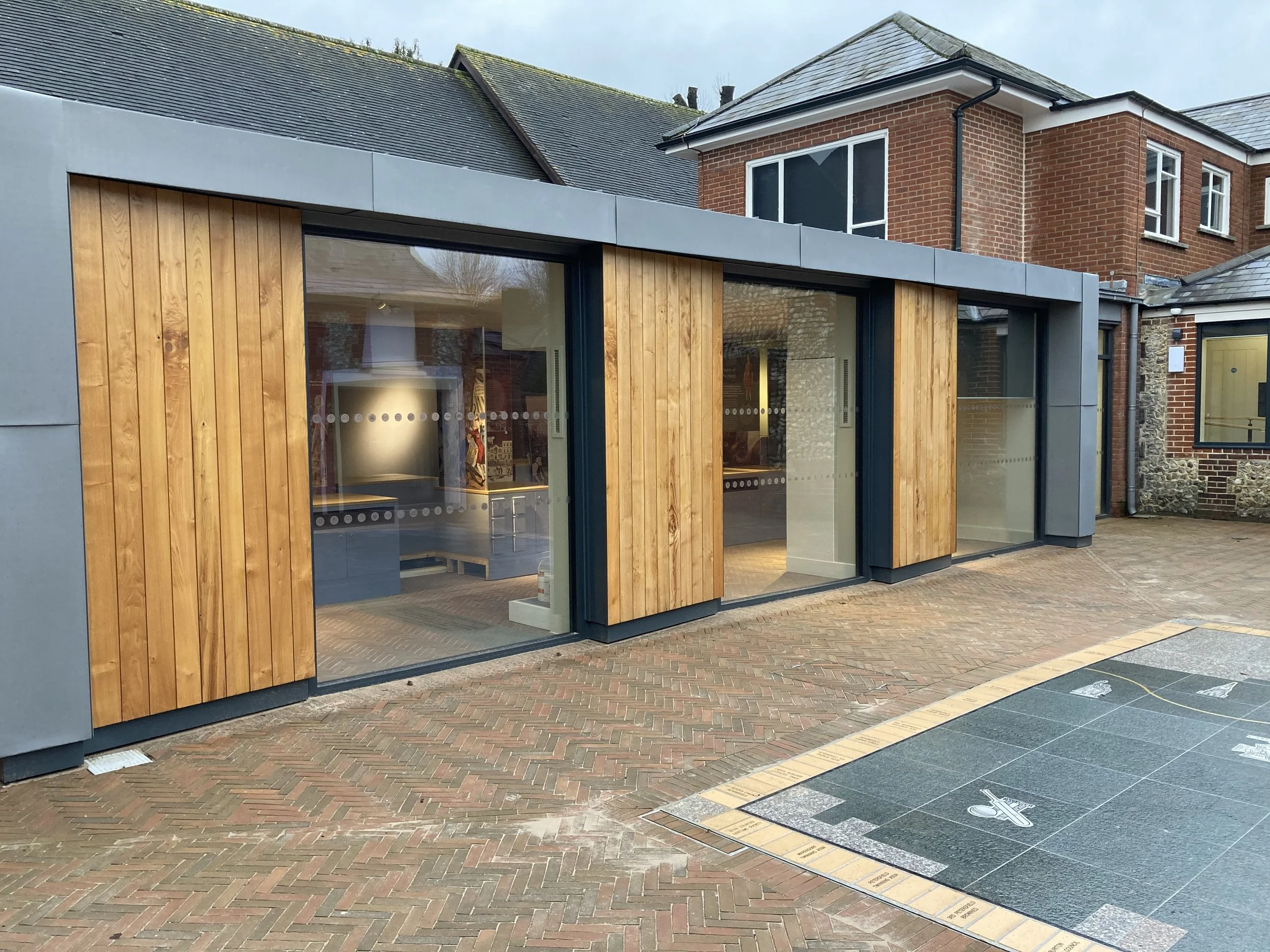
The museum’s new courtyard. (Image credit: Petersfield Museum and Art Gallery).
In 2024 the Petersfield Museum and Art Gallery held an exhibition about the life of the famed 20th art collector Peggy Guggenheim, who lived in the nearby Hampshire countryside for five years between 1934 and 1939. The exhibition drew widespread attention and included items on loan from the Peggy Guggenheim Collection in Venice, by artists such as Max Ernst, Henry Moore and Yves Tanguy. What makes this achievement particularly remarkable is that Petersfield Museum and Art Gallery barely existed 20 years earlier. And it is largely thanks to philanthropy that it is here today.
The story begins back in the early 1990s, when members of Petersfield’s local Historical Society began to look for somewhere to house their growing collection of artefacts; both to make them more secure and so that they could be shared with the wider public. Following years of negotiations with the local County Council, the historical society was finally granted a peppercorn rent on the former town courthouse building, and in 1999 a staff of volunteers was able to start opening the modest new local museum to the public for two hours a day, twice a week.
Things grew slowly over the following years, then in 2005 the first big transformation came, thanks to a gift left by a local solicitor who had been a member of the historical society - which turned out to be more than a million pounds. This money was unrestricted, and proved to be game-changing for the nascent local museum. The organisation, which had been informal up to that point, registered itself as a charity; and it was for the first time able to employ a full-time professional curator to look after its collection.
The museum’s increased credibility and profile brought new opportunities. In 2007 they were approached by the Hampshire Museum Service (part of the local council), which had inherited the home and collection of renowned local painter Flora Twort, but were not in a position to manage them properly. Petersfield Museum, as it was then known, therefore agreed to take over ownership of these assets and manage them alongside their existing collections. A couple of years later, the museum was approached by a local private school – Bedales - to see if they would be interested in taking ownership of a collection of theatrical costumes. This turned out to comprise more than a thousand items spanning the periods from the 1750s through to the 1950s, so the museum again said yes.
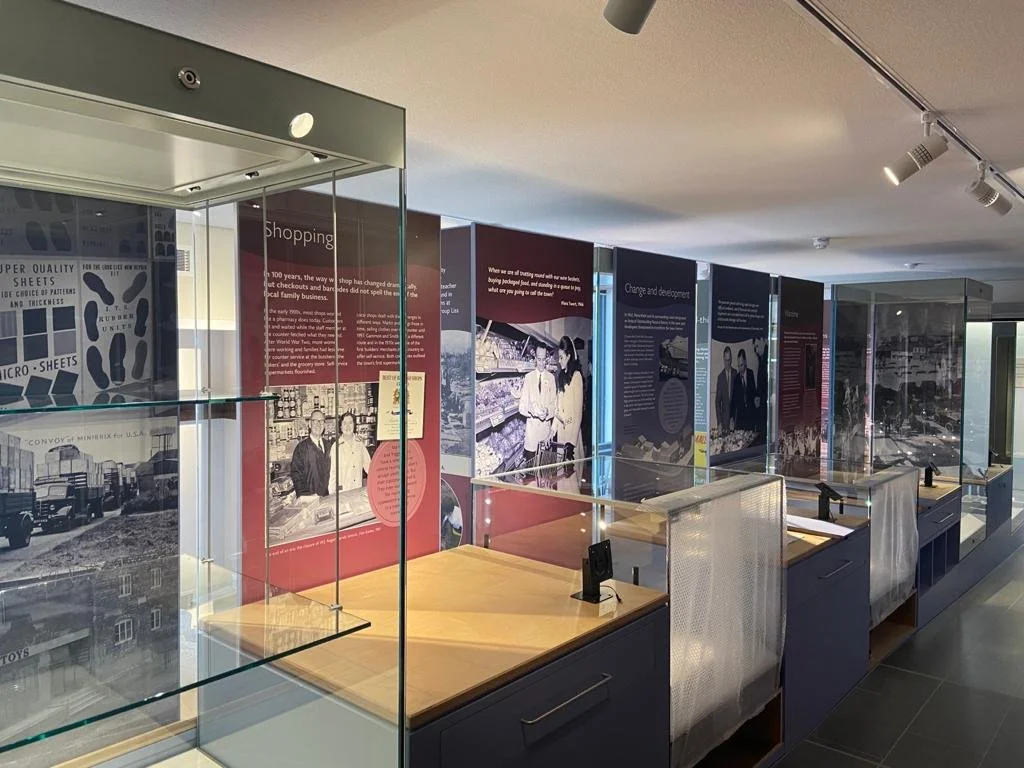
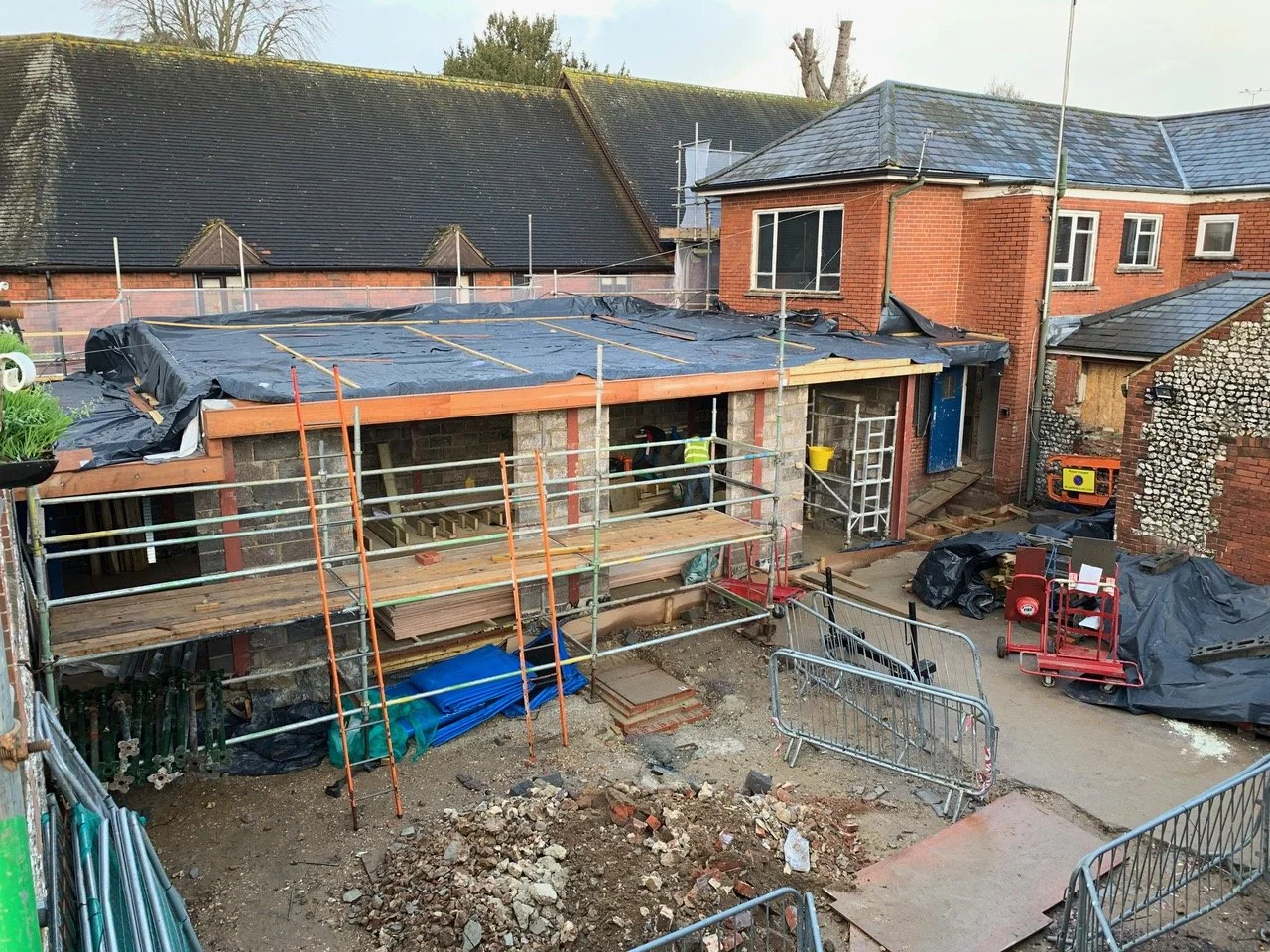
Petersfield Gallery approaching completion. (Image credit: Petersfield Museum and Art Gallery).
Thanks to these acquisitions, the museum unexpectedly found itself stretched across three sites, so in 2012 the trustees began to investigate whether their existing site could be developed and thus allow them to bring all their work together in one place. A feasibility study was commissioned, leading to a target of raising 2 to 3 million pounds. And this is when philanthropy once again made the difference. As luck would have it, Hampshire Police were at the same time beginning the process of selling off the Petersfield police station building that adjoined the old courthouse that the museum was already occupying. The museum’s trustees moved swiftly to get this listed as a Community Asset, which gave them a 6-month window in which they would have the first option to buy the property. Helped on by the philanthropic gift they had received, the money was in place, and they were successfully able to buy the police station outright when it came to market.
At the same time, the trustees of the museum had slowly been developing links with a local family foundation, who offered to give them £600,000 when they heard about the new plans - on the basis that this would help the museum in its bid to secure funding from the National Lottery Community Fund. This gambit was successful, and the museum secure a lottery grant to take it up to £1.5 million.
That was not quite the end of this philanthropy story, however. The funder who had originally put up £600,000 to help Petersfield Museum secure its Lottery funding noticed that there was a corner of the newly-acquired building not accounted for on the plans. When asked why this was, the museum told them that it was because they wanted to develop this area to the level required to qualify for a Government Indemnity Scheme – which would allow them to realise their ambition of bringing in items on loan from other museums and galleries. This would cost an additional £375,000, so they had been reluctant to include it in their Lottery bid for fear of torpedoing the whole thing. The funder went away at this point, and then a few days later the museum received a cheque for £375,000 in the post – much to their surprise!
Thanks to the philanthropic support it received at key points, the recently renamed Petersfield Museum and Art Gallery has been able to develop from a tiny local museum with no proper home of its own, and only opening a few hours per week with the help of volunteers, into a thriving arts and cultural institution that provides a hub for the local community and is able to host exhibitions including world-class objects.
There is still more to be done, of course. The environment for museums and art galleries remains particularly challenging right now, so renewed focus needs to be put on fundraising – including cultivating more philanthropy. At the same time, whilst the Petersfield Museum and Art Gallery has increased its profile enormously over the years, there are still people in the local area that are not aware of its work and how they could benefit from it, so more work needs to be put into outreach and spreading the word. The start it has been given by philanthropy, however, means that the museum is in a great position to push on into the future.
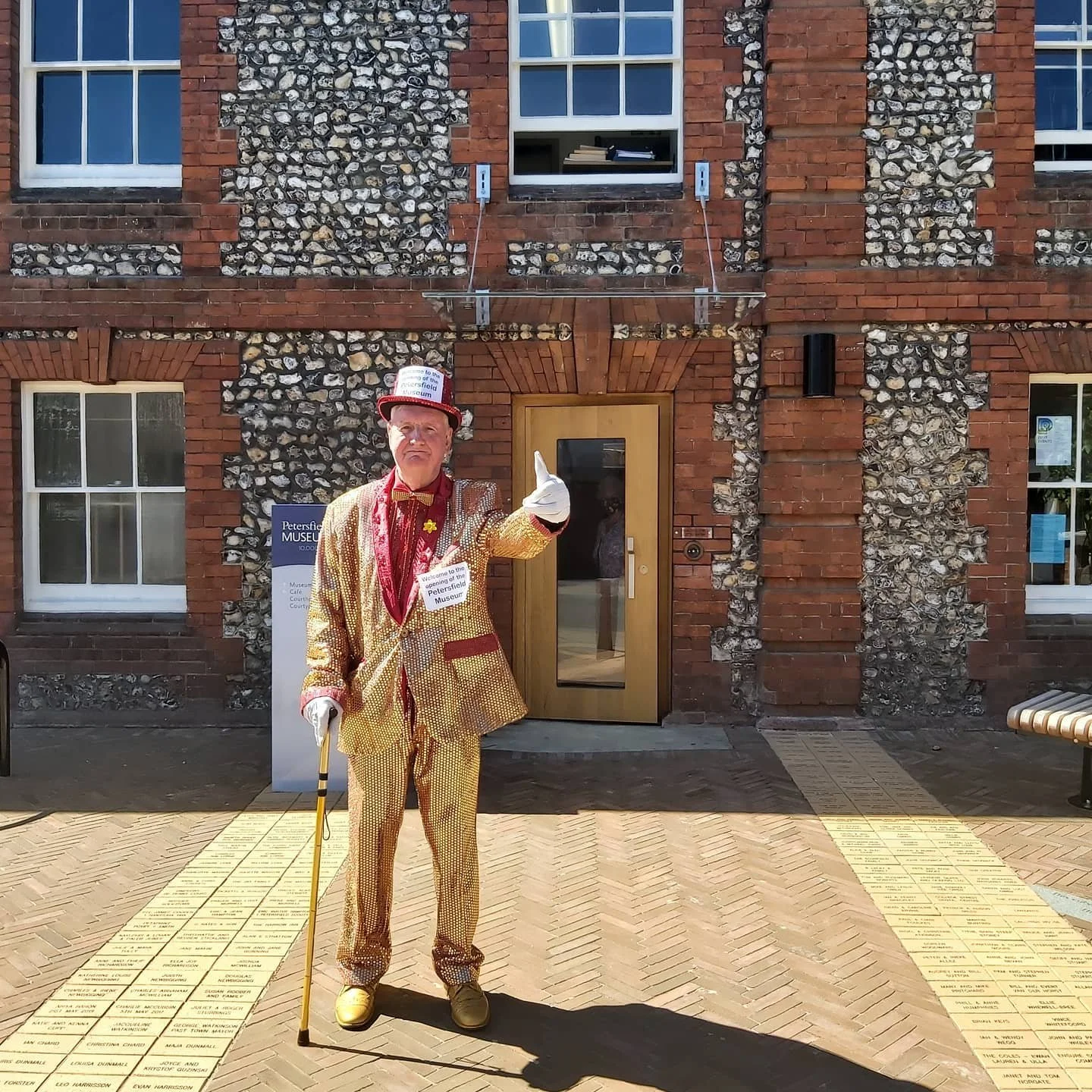
David Weekes, “Mr Petersfield” at the musuem opening day in 2021. (Image credit: PM & AG).