The Squires Foundation
How a family-run foundation uses its philanthropy to support a wide range of project around the North-East of England.

Participants at a session run by James’s Place. (Image credit: James’s Place).
For those of a certain age, the mention of a youth centre in Newcastle’s Byker district will inevitably bring to mind the seminal BBC TV programme Byker Grove. The series, which ran between 1989 to 2006, depicted the comings and goings at a fictional youth club, and famously launched the careers of Ant and Dec. Yet for many years in Byker – which remains one of Newcastle’s most deprived areas – the reality for young people was that there was no place like Byker Grove that they could go, and local youth work basically had to take place on the street.
To address this problem, The Lighthouse Project was formed in 2019 with an ambitious plan to turn a church in Byker into a state-of-the-art youth and community hub: a dream which was finally realised in June 2025, when the new centre opened its doors for the first time. In the short space of time, it has been open, the new hub has already become a hugely valuable resource for local people. It is also providing a new home to around 20 other small charities and community groups that have chosen to base themselves in the building - thereby saving between £5K and £15K on office costs every year.
To get to this point the Lighthouse Project had to do some serious fundraising: over the course of 4 years the team was able to raise nearly £5 million towards the cost of developing and running the new centre, including a £4.2 million grant from the Department for Culture, Media and Sport's Youth Investment Fund and significant donations from a number of local charitable trusts. One of these charitable trusts was the Squires Foundation, which in addition to contributing to the capital costs of the new centre has also committed to support its ongoing core costs for the next 10 years. As Matthew Squires, one of the trustees, explains, this is by far the longest-term grant the foundation has ever made, but the hope is that by signalling their support in this way, they can encourage other funders to get involved too.
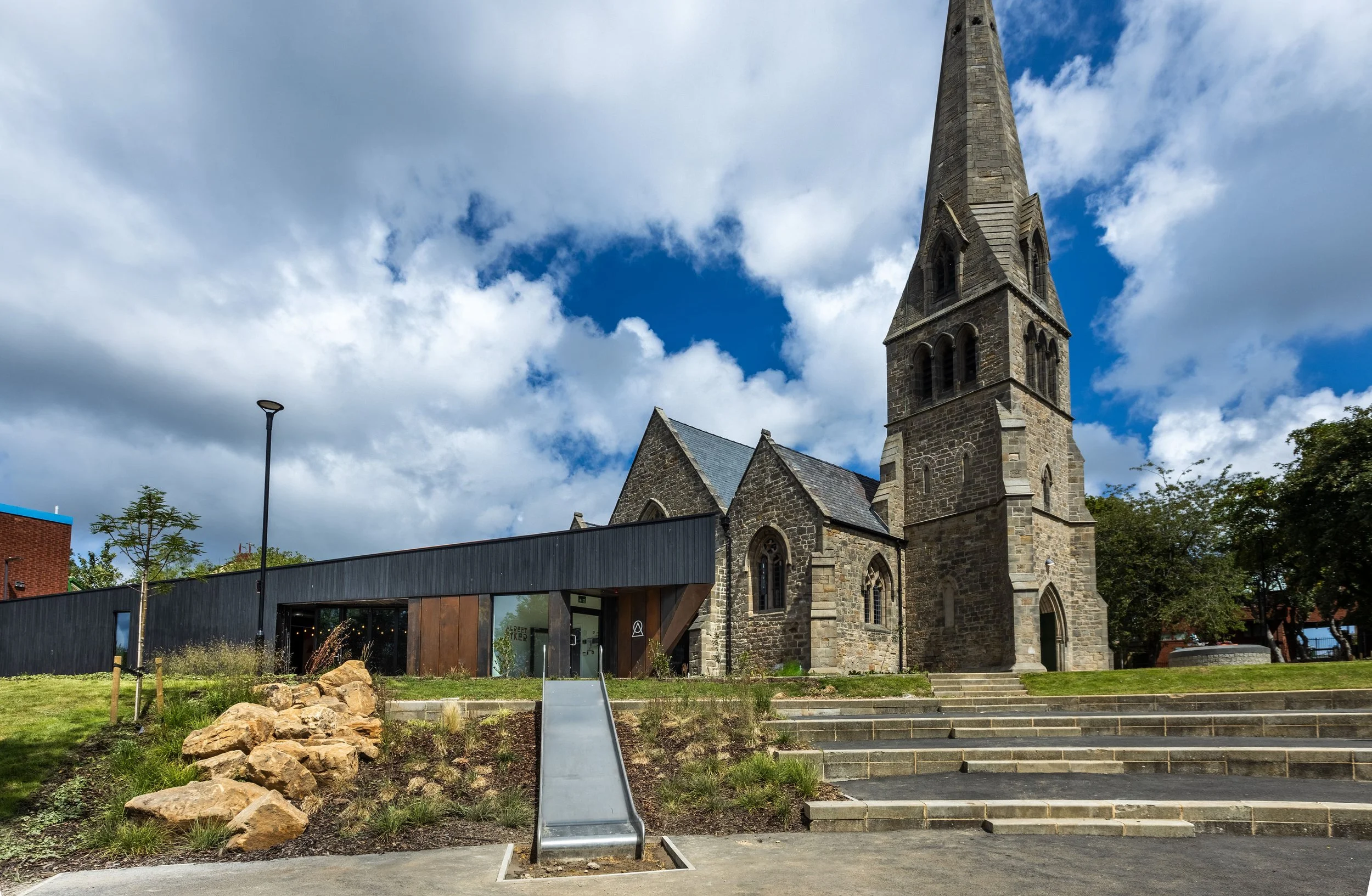
The Lighthouse Project in Byker, Newcastle-Upon-Tyne. (Image credit: The Lighthouse Project).
The Squires Foundation has deep roots in the Northeast. Matthew Squires grandfather, James, grew up in Byker and became a successful grocer with a sideline in selling cars. Over time, it became clear that the car business was where the money was, and in 1957 James established Benfield Motors, a car dealership company that grew substantially over time - at its peak employing over 1,600 people and owning 30 dealerships across the north-east of England, Cumbria, Yorkshire and Scotland. The business had a long track record of philanthropy: in 1984 it established the Benfield Motor Charitable Trust for its giving, and five per cent of the company’s profits went into this charitable trust each year. Benfield Motors was eventually sold in 2015, at which point the trust changed its name to the Squires Foundation, but the family have carried on the tradition of dedicating a percentage of their annual business profits back into philanthropy (albeit these days from their family investment firm, rather than from selling cars).
The Squires Foundation supports a wide range of charitable organisations across the Northeast and is always on the lookout for projects that could have a real impact on lives and communities in the region. Recently the foundation has supported James’s Place, a male suicide prevention charity. This is an area of clear and growing need: in the UK, suicide is the number one cause of death for men under 35, and the Northeast has one of the highest suicide rates in England. One of the main challenges for men who have suicidal thoughts is often that they simply cannot find or access the kind of emergency help and support that might prevent them acting on those thoughts. James’s Place was set up in Liverpool in 2018 to address this problem, by the parents of a young man named James who was unable to find the help he needed at a moment of crisis and subsequently died by suicide. The charity’s focus is on ensuring that other young men don’t find themselves in the same situation, are that the able to find the help and support they need straight away. As well as the original centre in Liverpool, James’s Place also has a centre in London and, since 2024, one in Newcastle – which in its first 18 months supported over 750 men who were having suicidal thoughts. The funding they have received from the Squires Foundation is being used to launch a peer support group, for men who have undergone an initial 6-week intervention and would benefit from further ongoing help.
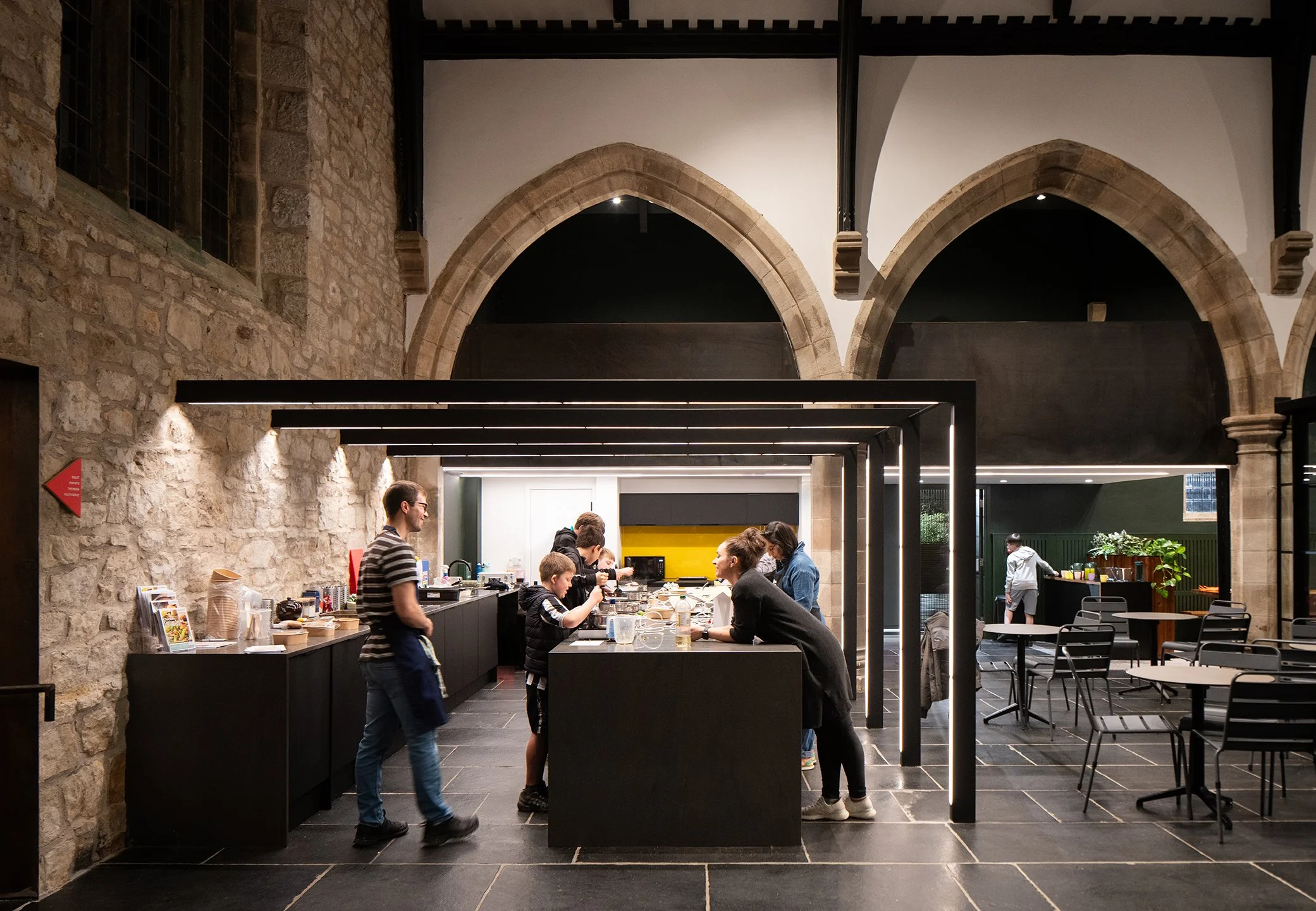
Children taking part in a cooking class at the Lighthouse Project. (Image credit: Lighthouse Project).
The Squires Foundation has also branched out recently into funded environmental causes. This was something that certain members of the family had wanted to do for a while, so a few years ago the foundation trustees began looking seriously into what they could do to support the environment. In the end they settled on something which neatly combines their existing focus on the North-East with environmental impact: a new nature recovery project for land surrounding the iconic landmark of Hadrian’s Wall, led by Northumberland National Park Authority. This project, which is centred on land surrounding Hadrian’s Wall - including the site of the iconic Sycamore Gap tree, whose felling in 2023 caused widespread public condemnation and grief - is bringing together environmental groups, heritage charities, forestry authorities, local farmers and local communities to develop a share approach to managing land for the benefit of nature. The money from the Squires Foundation is being used to fund a new Ranger post that can help push the nature recovery project forward, and the family have become so invested in the project that one of them – Matthew Squires – has even taken things a step further by taking on a job as a part-time Fundraising Officer for the Northumberland National Park Authority!
When philanthropy is driven by a strong sense of place, and is responsive to the needs and priorities of a local area, it is clear that it can play a vital role alongside local government and local businesses in strengthening that place and improving life for the people and communities who live there.